
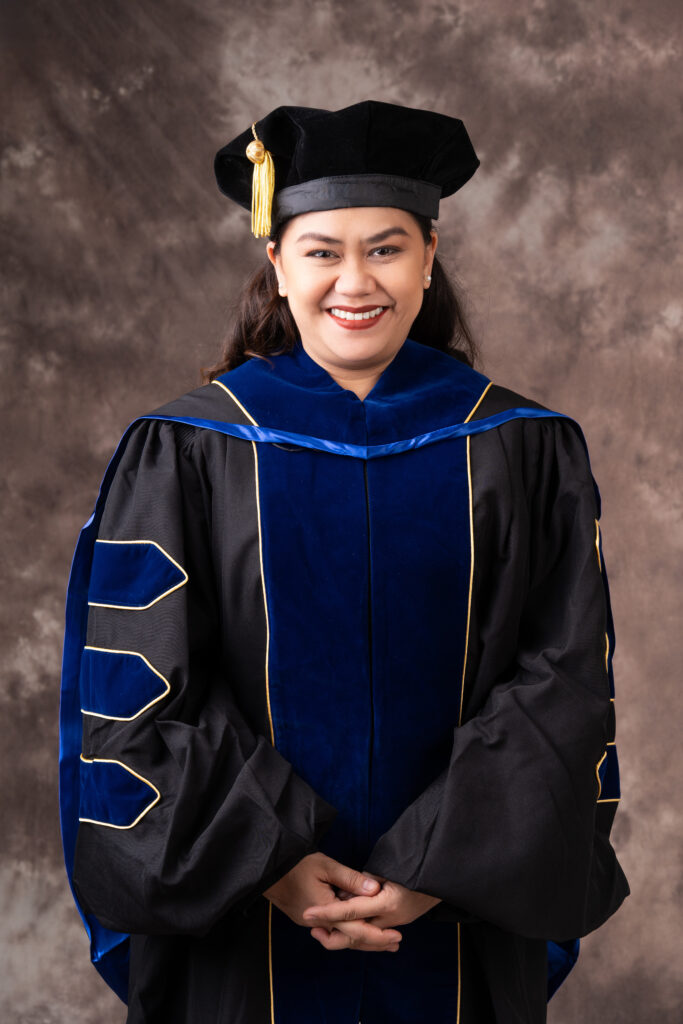
Graduation is a milestone worth celebrating, but standing in front of a camera can feel intimidating, especially if you are not used to having your photos taken. You may know how you want to look in your graduation photos, but once the camera is pointed at you, it is easy to feel awkward about where to put your hands, how to stand, or whether your smile looks natural.
The good news is that you do not need to be naturally photogenic or experienced at posing to take great graduation photos. With a few simple techniques and guidance from a professional photographer, you can feel more relaxed and confident during your graduation photoshoot.
Whether you are planning a solo graduation portrait, a family photoshoot, or a fun session with friends, learning a few easy graduation photoshoot poses can make a significant difference to the final photographs.
Here are some practical tips on how to pose for graduation photos, especially if you consider yourself camera-shy.
Graduation Photo Poses Ideas for Camera-Shy Graduates
1. Start With a Natural Standing Pose
One of the easiest ways to begin a graduation photoshoot is with a simple standing pose. You do not need to create a complicated pose immediately. Start by standing comfortably with your shoulders relaxed and your feet positioned naturally.
Avoid standing completely straight with your arms pressed against your body. This can make the photograph look stiff. Instead, keep a small amount of space between your arms and body and slightly shift your weight onto one leg.
You can also angle your body slightly rather than facing the camera completely straight on. Turning your shoulders a little can create a more relaxed and natural appearance.
The key is to avoid overthinking the pose. Start with a comfortable position and allow your photographer to make small adjustments to your posture.
 2. Know What to Do With Your Hands
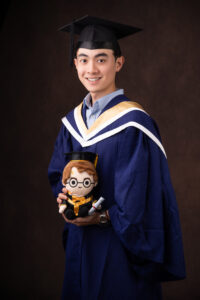
One of the most common concerns among camera-shy graduates is, “What should I do with my hands?”
When you are nervous, it is easy to hold your hands tightly together or leave them hanging awkwardly at your sides. Instead, give your hands something natural to do.
For example, you can:
- Hold your graduation certificate.
- Hold your graduation cap.
- Lightly adjust your gown.
- Place one hand in a pocket, if your outfit allows it.
- Hold your cap with both hands.
- Gently clasp your hands in front of you.
- Use one hand to touch your graduation hood or gown.
- Get a prop to hold in your hand.
Holding a meaningful graduation item can also make the photograph feel more connected to the occasion.
If you are unsure what to do, simply ask your photographer for direction. A professional photographer can suggest small hand movements and positions that look natural rather than forced.
3. Relax Your Shoulders
Your posture can reveal how comfortable you feel in front of the camera.
When people are nervous, they often raise their shoulders without realising it. This can make the entire pose appear tense. Before each photograph, take a slow breath and consciously drop your shoulders.
Think about standing tall without becoming rigid. Keep your back straight, relax your shoulders, and slightly lengthen your neck.
Instead of thinking, “I need to pose perfectly,” think about looking comfortable and confident. This small adjustment can make your graduation portraits look significantly more natural.
4. Try the Slight Body Turn
Facing the camera directly is perfectly fine, but turning your body slightly can create a more dynamic portrait.
Stand with your feet facing slightly to one side and turn your upper body towards the camera. Keep your face directed towards the lens. This creates a subtle angle without requiring an elaborate pose.
You can also experiment with turning your body away from the camera and looking back over your shoulder. This works particularly well for graduation gowns because it allows the shape and movement of the gown to become part of the photograph.
5. Use Your Graduation Cap as a Prop
Your graduation cap is one of the most recognisable symbols of the occasion, so make use of it during your photoshoot. You can hold it in front of you, hold it by your side, place it against your body, or gently adjust it while looking towards the camera.
Another classic option is the cap toss. Instead of simply standing and smiling, you can throw your cap into the air while your photographer captures the moment.
If you are uncomfortable with a dramatic cap toss, you can create a quieter version by holding the cap above your head or looking at it while holding it in your hands. The goal is not necessarily to create a dramatic photograph. It is to find a movement that feels comfortable for you.
6. Take a Few Looking-Away Shots
You do not have to look directly into the camera for every photograph.
Looking slightly to the side can create a more relaxed and editorial feel. It can also be helpful for people who feel uncomfortable maintaining eye contact with the camera. Try looking:
- Slightly to the left or right.
- Down at your graduation certificate.
- Towards your graduation cap.
- Over your shoulder.
- Slightly above the camera.
These subtle variations can produce a collection of photographs with different moods. If you feel particularly nervous when looking directly at the lens, starting with looking-away poses can also help you become more comfortable before moving into traditional portraits.
7. Let Yourself Smile Naturally
A natural smile is often easier to achieve when you stop trying to create one.
Instead of holding a smile for an extended period, relax your face between photographs. Your photographer can then capture different expressions as you interact, move, or respond to simple prompts.
You can also think about the moment you are celebrating. Remembering your graduation day, your friends, your family or the journey that brought you there can help create a more genuine expression.
Not every graduation photograph needs to show a big smile. A subtle smile, relaxed expression, or confident look can also create a sophisticated portrait.
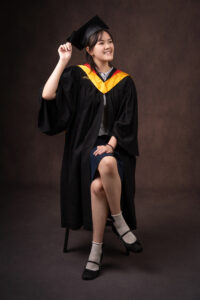
8. Try Sitting Poses
Sitting poses are another excellent option for camera-shy graduates because they can feel less formal than standing in front of the camera. Depending on the studio setup, you might sit on a stool, chair, or other suitable prop.
You can sit facing the camera, turn slightly to one side or cross your legs comfortably. Your graduation cap can be held in your lap, placed beside you or used as part of the composition.
When sitting, remember to maintain good posture. Avoid slouching, but do not sit so rigidly that the pose feels uncomfortable. Your photographer can also experiment with different camera angles to create a variety of portraits from the same seated position.
9. Incorporate Movement Into Your Photos
If you find traditional posing uncomfortable, movement can help. Instead of standing still, try walking slowly, adjusting your gown, turning around, or gently moving your graduation cap.
Movement gives you something to focus on other than the camera. It can also create more candid-looking photographs. For example, you could walk towards the camera while holding your certificate, walk away while looking over your shoulder, or gently move your gown as you turn.
These photographs can feel more spontaneous and are particularly useful if you prefer natural-looking images over highly posed portraits.
10. Take Close-Up Portraits
Graduation photos are not limited to full-body photographs. A professional graduation photoshoot can include close-up portraits that focus on your face, graduation cap, gown, and other details.
For close-up photographs, keep your shoulders relaxed and avoid forcing your expression. You can look directly into the camera or slightly away from it.
Small details such as your graduation hood, academic sash, medal or customised graduation cap can also add personality to these photographs. Close-up portraits are especially useful when you want a more timeless image that can be displayed or used as a professional profile photograph.
11. Don’t Forget Family Photos
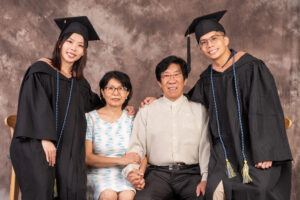
Graduation is rarely an achievement that belongs to one person alone. Parents, siblings, and other family members often play an important role in the journey. Including family members in your graduation photoshoot can create meaningful photographs that you will appreciate for years to come.
For family portraits, start with a simple standing arrangement. The graduate can stand in the centre while parents or family members stand beside them.
You can also create more relaxed photographs by having everyone interact rather than looking at the camera in every shot. For example, family members can look at the graduate, share a laugh or simply stand close together. These interactions can create photographs that feel personal rather than overly formal.
12. Have Fun With Siblings or Friends
Your graduation photoshoot does not have to be serious from beginning to end. If you are taking graduate photographs with siblings, classmates or close friends, use the opportunity to show your personalities. You could:
- Stand together with your graduation caps.
- Create a group cap toss.
- Walk together.
- Laugh and interact naturally.
- Arrange yourselves at different heights.
- Take a celebratory group photograph.
- Create a fun formation.
- Recreate a memorable moment from your student years.
Group photographs can sometimes feel chaotic, so having a photographer guide everyone’s positioning can help create a balanced composition.
13. Use Small Movements Instead of Complicated Poses
You do not need to know dozens of complicated poses to get great graduation photographs. In fact, simple movements often look more natural.
Try turning your head slightly, adjusting your cap, shifting your weight, moving your hands, or taking a few steps. These small changes can give your photographer multiple opportunities to capture different expressions and angles.
The advantage of working with a professional photographer is that they can guide you through these movements rather than expecting you to know exactly what to do.
14. Don’t Try to Copy Someone Else’s Pose Exactly
It is perfectly fine to look at graduation photographs for inspiration, but remember that every person photographs differently.
A pose that looks natural on someone else may not feel comfortable for you. Your height, body language, outfit, personality, and comfort level all influence how a pose looks.
Instead of trying to recreate another person’s photograph exactly, use it as inspiration and adapt the idea to suit you. A good photographer will also make adjustments based on your individual features and comfort level.
15. Take Multiple Variations of Each Pose
You do not have to get the perfect photograph on the first attempt. Professional photoshoots usually involve taking multiple photographs from slightly different angles and positions.
For example, one standing pose can become several different images by changing your facial expression, hand position, body angle, or gaze. This is particularly helpful for camera-shy graduates because you can gradually become more comfortable.
The first few photographs may feel awkward, but after a few minutes, you will likely become more familiar with the camera and the photographer’s instructions.
16. Communicate With Your Photographer
One of the most important things you can do before your graduation photoshoot is tell your photographer that you feel uncomfortable in front of the camera.
There is no reason to feel embarrassed about it. Many people who look confident in photographs were not necessarily comfortable when they first stepped in front of the camera.
When your photographer knows that you are camera-shy, they can start with simple poses and gradually introduce more variations.
You can also tell them if there are certain angles or types of photographs you particularly like or dislike. Good communication helps the session become more collaborative and can make you feel much more relaxed.
17. Practise Before Your Graduation Photoshoot
You do not need to spend hours practising in front of a mirror, but a little preparation can help. Try standing in front of a mirror and experimenting with a few simple positions. Notice which side of your face you prefer and which expressions feel natural.
You can also take a few photographs using your phone. This is not about becoming perfect at posing. Instead, it helps you understand what feels comfortable so that you have a starting point during your professional photoshoot.
18. Focus on the Experience, Not Just the Camera
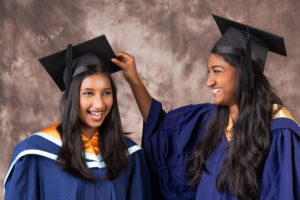
Perhaps the most important graduation photoshoot tip is to remember why you are taking the photographs. You have reached an important milestone. Your graduation portraits should capture more than your gown and certificate—they should capture your confidence, happiness, and sense of achievement.
If you spend the entire session worrying about whether you are posing correctly, you may find it harder to relax. Instead, focus on enjoying the experience. Laugh when something is funny. Talk to your friends. Interact with your family. Move naturally. Celebrate the achievement. These genuine moments can often become some of the most memorable photographs from your session.
Why Professional Guidance Can Make a Difference
You do not have to arrive at a professional photo studio knowing exactly how to pose. One of the advantages of booking a professional graduation photoshoot is having someone guide you through the process.
A photographer can help with your posture, hand placement, facial expressions, body angles and overall composition. They can also suggest different poses based on whether you are taking solo portraits, family photographs or group shots.
This can be particularly valuable for camera-shy graduates. Rather than standing in front of the camera wondering what to do next, you can simply follow clear instructions and gradually become more comfortable.
A professional photo studio in Singapore can also provide controlled lighting, suitable backgrounds, and a consistent setting for your portraits.
Final Thoughts
Being camera-shy does not mean you cannot have beautiful graduation photographs. You do not need to become an expert at posing or force yourself into complicated positions.
Start with simple standing and sitting poses, keep your shoulders relaxed, give your hands something natural to do, and experiment with different facial expressions and angles. Incorporate your graduation cap, certificate, family and friends to create a collection of photographs that reflects your personality and the significance of the occasion.
Most importantly, remember that posing is something you can learn and your photographer is there to guide you.
With the right preparation and professional direction, even camera-shy graduates can feel comfortable, confident, and natural in front of the camera—and walk away with graduation portraits that they will be proud to look back on for years to come.